


Walk-in showers and wet rooms are both popular choices for creating a clean, modern bathroom, but they are not quite the same thing.
Although the terms are often used interchangeably, the main difference comes down to how the shower area is constructed, how water is contained and how much of the bathroom needs to be waterproofed.
If you are planning a bathroom renovation, understanding the difference can help you choose the right option for your space, budget and preferred style.
What is a walk-in shower?
A walk-in shower is an open or partially enclosed showering area that you can enter without opening a traditional shower door.
It will usually include a large fixed glass shower screen, with the shower positioned behind it. Some designs use a low-profile shower tray, while others are installed almost flush with the surrounding bathroom floor.
The glass screen helps contain water within the shower area while maintaining the open, spacious appearance that makes walk-in showers so popular.
Walk-in showers can be installed in both large and relatively compact bathrooms, making them a flexible option for many properties.

What is a wet room?
A wet room is a bathroom where the shower area is integrated directly into the floor rather than being installed on a conventional shower tray.
The floor is designed with a slight gradient so that water runs towards a drain, and the surrounding area is fully waterproofed or “tanked” to protect the structure beneath.
Wet rooms may still include a bespoke glass shower screen to reduce water spreading across the room, but technically the bathroom itself is designed to cope with water outside the immediate showering area.
This creates a particularly seamless appearance, with very little visual separation between the shower and the rest of the bathroom.

What is the main difference between a walk-in shower and a wet room?
The biggest difference is the way the shower area is constructed.
A walk-in shower usually has a defined showering area, often incorporating a shower tray or dedicated drainage zone. Glass is then used to contain most of the water.
A wet room, on the other hand, is designed as a waterproof room with drainage built directly into the floor.
In simple terms:
Walk-in shower: An open shower enclosure within the bathroom.
Wet room: A waterproofed bathroom where the shower is integrated into the floor.
Both can look very similar once finished, particularly when large frameless glass panels are used.
Do walk-in showers need a shower tray?
Not always.
Many walk-in showers use slim shower trays because they provide a simple and effective way of controlling drainage.
However, a walk-in shower can also be installed with a tiled floor and concealed drainage system to create an almost completely level transition into the shower area.
This can give the appearance of a wet room without necessarily requiring the entire bathroom to be waterproofed in the same way.
The right solution will depend on the construction of the bathroom, available floor depth and drainage requirements.
Do wet rooms need shower screens?
A wet room does not technically need a shower screen, but installing one is often a very practical choice.
Without a screen, shower spray can travel much further across the bathroom, leaving toilets, basins, furniture and flooring wet after every shower.
A frameless glass shower screen provides a useful barrier while preserving the open appearance of the room.
For this reason, frameless or minimal glass screens are commonly used in modern wet rooms.

Which option is better for a small bathroom?
Both can work extremely well in smaller bathrooms.
A walk-in shower can make a room feel more spacious because there is no bulky framed enclosure or hinged shower door taking up valuable space.
A wet room can create an even stronger sense of openness because the floor continues uninterrupted throughout the bathroom.
However, water control becomes particularly important in a small wet room. A carefully positioned shower screen can prevent excessive spray from reaching other areas of the bathroom.
Made-to-measure shower glass can also be particularly useful where standard shower screens do not fit the available space.
Which is easier to install?
Walk-in showers are generally simpler to install because they do not necessarily require the entire bathroom floor and surrounding walls to be waterproofed.
A wet room requires more preparation.
The floor must be correctly formed to direct water towards the drain, while appropriate waterproofing systems must be installed before the finished surfaces are applied.
Incorrect installation can lead to drainage problems or water damage, so wet-room waterproofing should always be planned carefully.
Which is easier to maintain?
Both designs can be easier to clean than traditional shower enclosures.
Large glass panels have fewer frames, seals and moving components where soap residue and limescale can accumulate.
Wet rooms also remove the raised edges commonly associated with shower trays.
However, because more water may reach the surrounding floor in a wet room, good drainage and ventilation are particularly important.
Choosing high-quality shower glass can also make ongoing maintenance easier. 360 GSS supplies its bespoke shower installations with an anti-calcium coating designed to help reduce limescale build-up and keep the glass easier to clean.

Can shower glass be made to measure?
Yes, and bespoke shower glass is often one of the best ways to achieve a high-quality walk-in shower or wet-room design.
Bathrooms are rarely perfectly square, particularly in older or character properties.
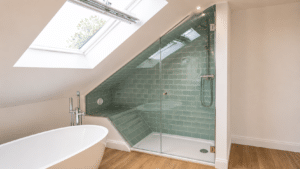
Made-to-measure shower glass can be produced to work around:
- Sloping ceilings
- Uneven walls
- Roof eaves
- Alcoves
- Low ceilings
- Bespoke shower trays
- Unusual bathroom layouts
Custom glass also allows the position, height and width of the shower screen to be designed specifically around the shower and surrounding bathroom.
This can improve both the appearance of the room and the effectiveness of the screen in controlling water.
For particularly awkward spaces, 360 GSS also specialises in custom glass shower installations where standard off-the-shelf enclosures may not be suitable.

Walk-in shower or wet room: which should you choose?
A walk-in shower may be the better option if you want an open, modern shower design without completely restructuring and waterproofing the bathroom.
A wet room may be preferable if you want the most seamless possible appearance, completely level access and a bathroom designed around an integrated shower area.
In many cases, the visual result can be very similar.
The quality, size and positioning of the shower glass therefore plays an important role in creating the finished look.
Bespoke shower glass from 360 GSS
At 360 GSS, we design, supply and install bespoke shower screens and enclosures for bathrooms of all shapes and sizes.
From simple walk-in shower screens to glass panels for wet rooms and fully bespoke shower enclosures, every installation can be made to measure around the exact dimensions of your bathroom.
360 GSS uses premium 10mm toughened safety glass as standard and offers a wide selection of glass and hardware finishes to suit contemporary and traditional interiors.
We also provide local bespoke shower glass installation across London, Buckinghamshire, Berkshire, Hertfordshire, Surrey and Oxfordshire.
If you are planning a new walk-in shower or wet room, speak to the 360 GSS team about creating a bespoke glass solution for your bathroom.